Egmond Circle 2026: Connection, Support and Shared Experience
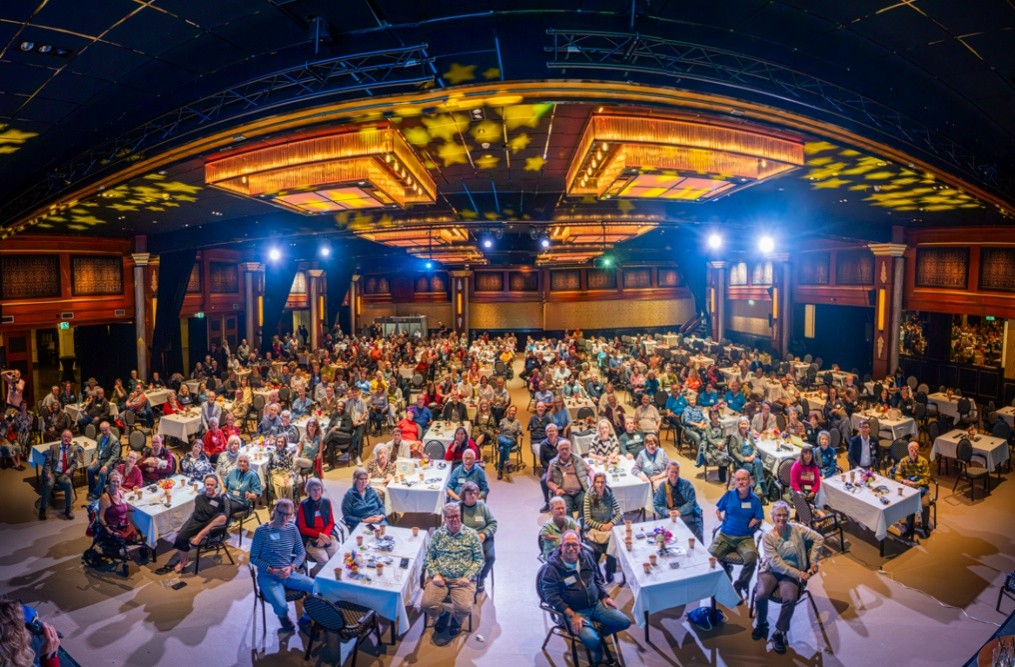
Egmond Circle International Gathering
Egmond Circle 2026: Connection, Support and Shared Experience
Mandy de la Mare, Chair of the Thalidomide Society, travelled to Egmond Circle 2026 in the Netherlands with Geraldine and Eddie. There was plenty to talk about when they came home, from the people they had met to a few mishaps that gave them all a good laugh.
Geraldine’s partner, Kim, Eddie’s personal assistant, George, and Mandy’s partner, Steve, went with them.
Geraldine does not enjoy flying, particularly when it means being separated from her wheelchair. She and Kim decided to look at travelling by train instead. Kim took care of the bookings for everyone, including help at the stations and an accessible taxi from Amsterdam Central Station.
Staff met them on the platform and helped them on and off the train. The group would have struggled without that help, so it was much appreciated. Their taxi was waiting in Amsterdam, and everything went smoothly. Information about arranging assistance is available through Eurostar’s accessible travel information.
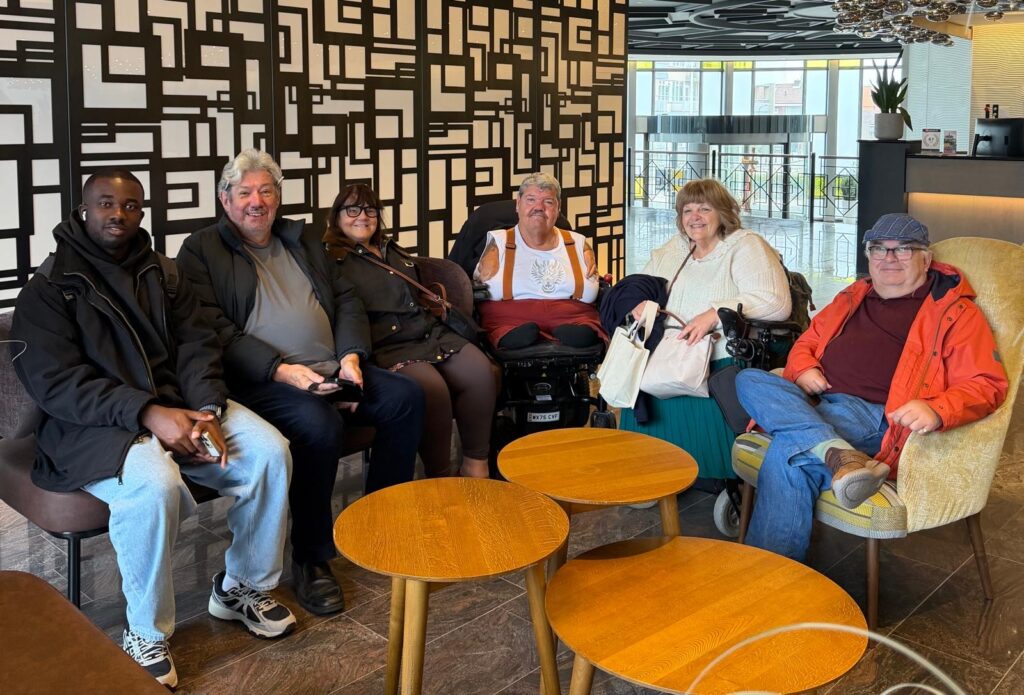
They stayed at Hotel Zuiderduin in Egmond aan Zee, about an hour outside Amsterdam. It was a very large conference hotel, and they arrived too late to register that evening. At breakfast the next morning, one of the organisers reminded them that the opening meeting would start at 10am sharp. They quickly finished eating and made their way to the main hall.
An impressive international gathering
Seeing so many thalidomide survivors together was quite something. People had come from 15 countries, and Mandy felt a connection with them straight away.
Grünenthal had provided significant sponsorship, as well as staff who helped out as floating personal assistants. The organisers had thought carefully about what people would need. There were headsets for interpretation, sign-language interpreters for Deaf attendees and live transcription on large screens. Mandy was impressed by how well it had all been arranged.
Several doctors and professors gave talks. Much of what they covered was familiar to Mandy, but she had a question for the representatives from the X Centre. She knew the Thalidomide Trust had worked with them before. Had they ever helped someone who, like her, had no arms and was blind? They had not.
They met Mandy the next day to talk through some suggestions. One was to try barefoot shoes. Their thin soles might make it easier for her to feel changes underfoot, including the edges of stairs and kerbs.
They also suggested a walking wheelchair, which they recommend for people who are at risk of falling. Mandy thought it might suit some people, but not her. They mentioned a blind person with multiple sclerosis who used a wheelchair and a cane, though Mandy felt that person’s needs were probably quite different from her own.
Celebrating foot users
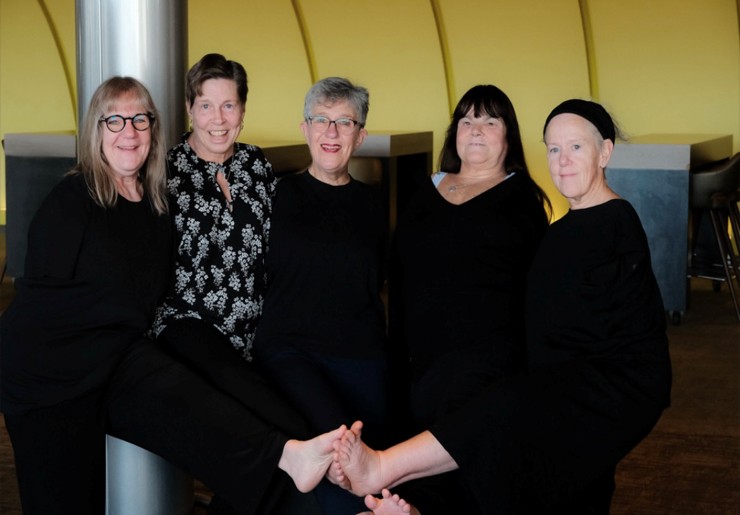
Mandy took part in a photo shoot with other people who use their feet for everyday tasks. Some were more agile than she was, but they came up with several interesting poses, keeping the attention firmly on their feet and the many ways they use them.
She enjoyed it. It felt good to show what they could do, rather than have the conversation centre on what was difficult.
Geraldine’s personal-support workshops
Geraldine ran two workshops on personal support. Both went well, and people had plenty to say.
The first was about learning to ask for help. Many disabled people have spent their lives being encouraged to be as independent as possible. After that, admitting that some help might make life easier is not always comfortable.
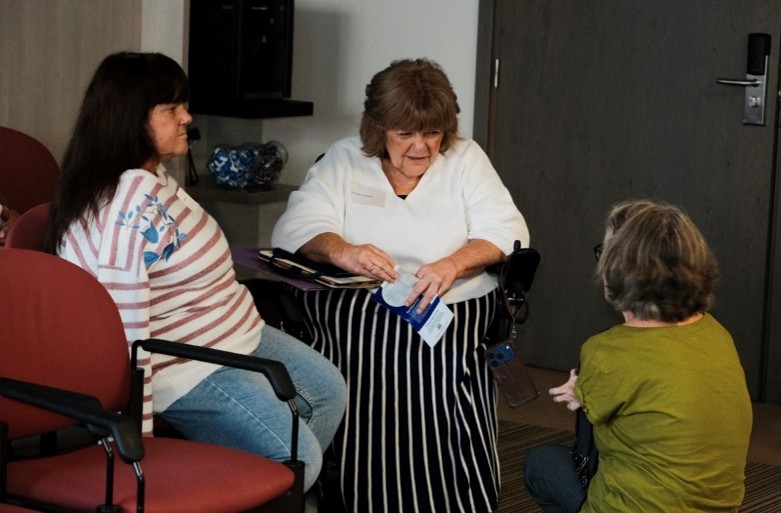
Many people were happy to accept help from a partner or family member, but the thought of a stranger helping with personal care was another matter. Mandy found this striking, given how many thalidomide survivors had spent long periods in hospital as children, sometimes without their parents being able to stay.
By the end, some were starting to reconsider. Still, the feeling was that many would wait until a crisis before arranging formal support. Mandy could understand that. She had only begun using Direct Payments when circumstances forced her to.
In the second workshop, they talked about starting small. Someone could begin with a little help around the house, giving them time to get used to having another person in their home. Later, that person might help with meals, trips out or social activities.
Then, if help with personal care was needed, it would come from someone they already knew and trusted. Most people felt this was a good way to approach it: a little at a time, rather than all at once.
Appreciating the support available in Britain
Talking to survivors from other countries made Mandy, Geraldine and Eddie appreciate the support available to British thalidomide beneficiaries all the more.
Some of the people they met had less financial help, or less say in how their allocations were spent. Others had to keep working because their pensions did not give them enough to live on.
It was sobering to hear how different life could be for people whose disabilities had the same cause. The group came away grateful for the support they received, and aware that many others did not have the same choices.
Laughter along the way
There were lighter moments, too. Mandy was full of praise for the organisers and the hotel’s accessible bedrooms, although her wet room took some getting used to. It was so big that, for the first three nights, she could not find her way back to the door after using the toilet.
Steve had to come in and guide her out. Eventually, he gave her a simple direction: stand up, turn sharply left and walk straight ahead. That did the trick, and the story gave the group a good laugh.
Eddie had an unexpected trip in a lift. Geraldine had just got out when the doors closed, leaving him inside. He could not reach the buttons, so he had to wait for someone else to get in and help him back to the right floor.
A powerful sense of belonging
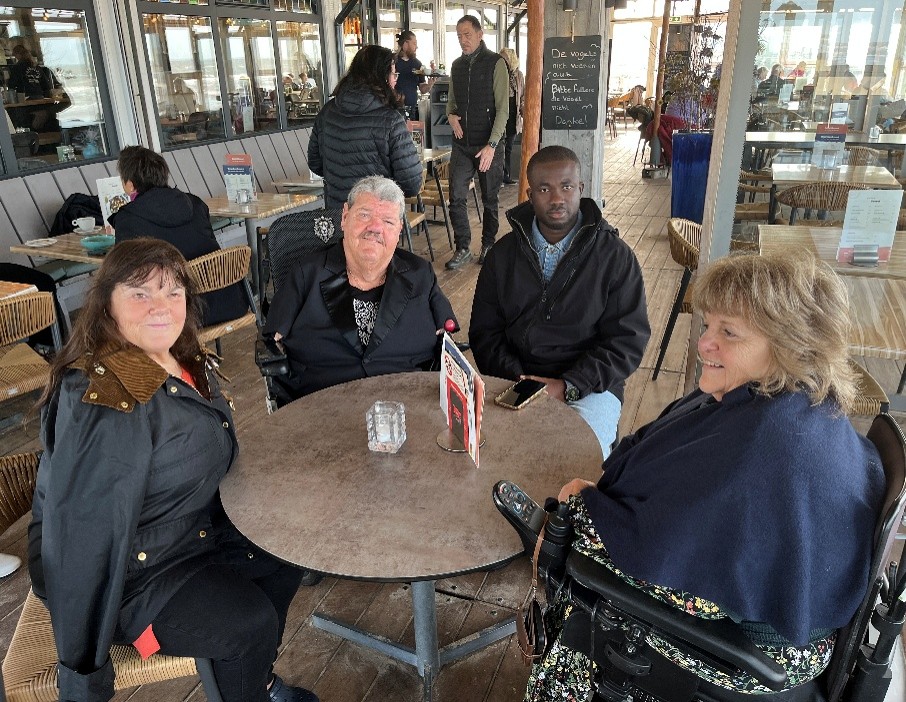
All three would consider going again. They had met lovely people from around the world. Sitting together with so many others whose lives had been affected by one small tablet was something none of them would easily forget.
For Mandy, one of the best things was simply being part of the crowd. She is used to standing out when she is on her own. Here, she could enjoy being among people who shared so much of her experience.
If another gathering like Egmond Circle takes place, she would encourage other thalidomide survivors to go. She found it hard to explain just how it felt to be there, but it was something she hoped others would have the chance to experience.
She was grateful to everyone who had worked so hard to make the event welcoming and accessible. There had been useful conversations and plenty of laughter, but above all, she had enjoyed being together.
Mandy de la Mare attended with Geraldine and Eddie, accompanied by their partners and personal assistants.